

It’s the eyes people always remember.
On the night of November 15, 1966, two young couples were driving near a sprawling, derelict munitions plant outside Point Pleasant, West Virginia. It was a place locals knew simply as the TNT Area, and it was the last place you’d want to see something you couldn’t explain. That’s when their headlights caught two huge, glowing red circles by the side of the road. According to the witnesses, the eyes were attached to a gray, muscular creature “shaped like a man, but bigger,” with ten-foot wings folded against its back. When they sped away, the creature reportedly pursued them, keeping pace with their car even as it topped 100 miles per hour.
Their terrified report to the Mason County Sheriff’s Department could have been an isolated incident, a strange footnote in a small town’s history. But it wasn’t. When the Point Pleasant Register published the story with the headline “Couples See Man-Sized Bird… Creature… Something,” it opened a floodgate. What had been whispered about was now out in the open, and others felt they could finally come forward. The phenomenon had a name, “Mothman,” and it was just getting started.
For the next thirteen months, Point Pleasant became a focal point for high strangeness. The Mothman was seen again, but the reports also expanded to include strange lights in the sky, bizarre electrical malfunctions, and unnerving visits from men in dark suits who questioned witnesses and then vanished. Then, on December 15, 1967, the Silver Bridge connecting Point Pleasant to Ohio collapsed into the river during rush-hour traffic, killing 46 people. In the tragedy’s aftermath, residents realized something deeply strange: the Mothman sightings had completely stopped.
The official cause of the Silver Bridge disaster is a matter of public record, a cold engineering fact. Yet, the timing remains a profound and deeply unsettling coincidence. The thirteen-month window of bizarre phenomena seems to open and close in perfect, terrible alignment with the town’s greatest tragedy. Unraveling what truly happened in the Ohio River Valley requires examining these two parallel histories - the story told by terrified eyewitnesses, and the one told by the fractured steel of the bridge. This is the complete case file: a deep dive into the sightings, the history, and the disturbing space where they might connect.
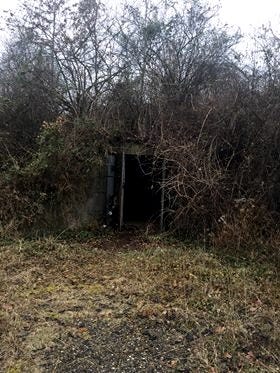
The Seminal Encounter: A Legend is Born in the TNT Area
Every investigation has a starting point —a single event that sets everything else in motion. For the Mothman, it was a late-night drive on November 15, 1966.
Two young married couples, Roger and Linda Scarberry and Steve and Mary Mallette, were in Roger’s 1957 Chevy, doing what kids in small towns do - cruising around with no particular place to go. Their route took them through the sprawling, dark expanse of the West Virginia Ordnance Works, the TNT Area. It was a popular spot for young people, a maze of overgrown roads, decaying concrete domes, and the skeletal remains of a WWII munitions factory. As they passed the derelict North Power Plant, their headlights swept across something that didn’t belong.
Standing by the roadside were two enormous, glowing red eyes. They were attached to a creature the four witnesses described as being “shaped like a man, but bigger,” somewhere between six-and-a-half and seven feet tall. It was gray, muscular, and had huge wings folded up against its back. Linda Scarberry would later report that the eyes were hypnotic,” a stare so intense it prevented her from making out any other details of its face, or if it even had one.
Panic set in. Roger Scarberry slammed his foot on the accelerator, peeling away down State Route 62 toward town. But the thing they saw wasn’t stationary. The creature unfolded its massive wings - with a span they estimated at ten feet - and took to the air, pursuing them. This is where the report goes from strange to utterly impossible. The witnesses claimed the creature easily kept pace with their car as it hit speeds over 100 mph. It wasn’t flapping wildly; it was gliding, effortlessly, its wings seemingly held rigid as it shadowed the Chevy down the highway. Mary Mallette recalled hearing a high-pitched squeaking sound from it, “like a big mouse.” The chase only ended when they reached the city limits of Point Pleasant, where the creature finally banked away and disappeared into the darkness.
Shaken and terrified, the four didn’t go home. They drove directly to the Mason County courthouse to find a police officer. There, they reported their encounter to Deputy Millard Halstead. Halstead knew the Scarberrys and Mallettes. He saw that they weren’t drunk, and he recognized the look of genuine fear in their eyes. He followed the couples back to the TNT Area to investigate the site of the encounter. They didn’t find the creature, but Halstead did notice something strange. As they got close to the old power plant, his police radio was suddenly overwhelmed by a loud, unexplainable static - a detail that, until then, had no connection to the winged thing they’d just seen.
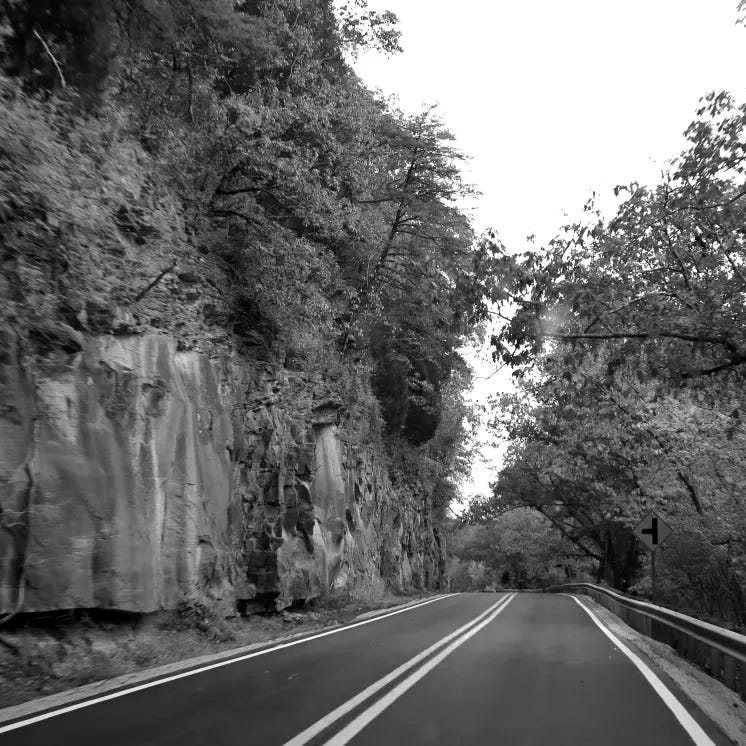
Anatomy of a Nightmare: A Composite Profile of the Creature
The first story from the Scarberrys and Mallettes was the spark. But as more reports flooded in, the details began to form a pattern. Investigators and journalists who sifted through the accounts from those thirteen months started to see a creature that was described with remarkable consistency.
So, what did this thing look like?
Size & Build
Across the board, witnesses agreed on the basics. It had a humanoid shape, but it was massive. The most common description was straightforward: “shaped like a man, but bigger.” We’re talking six-and-a-half to seven feet tall. And powerful. Most accounts mentioned a broad, muscular build. The color was usually reported as a dull gray or brownish color. John Keel, after collecting over a hundred reports, noted that the consensus was clear: the creature was gray, and it appeared to be completely featherless.
Wings & Flight
And the wings… this is where the reports get really strange. Witnesses put their span at a massive ten feet. But it’s not the size that’s baffling; it’s how the creature used them. It didn’t seem to flap. The original witnesses were adamant that it kept up with their car at over 100 mph while just… gliding. Silently. Effortlessly. When it was on the ground, the wings were tucked tightly against its back. Other reports claimed it could shoot straight up into the air like a helicopter. These aren’t the characteristics of any known animal. The flight dynamics don’t make sense.
The Red Eyes
Every witness mentioned the eyes. They were its defining feature. They were consistently described as large, round, and intensely red. But they also glowed. Witnesses often compared their luminosity to “automobile reflectors” or “bicycle reflectors.” Some even reported that the eyes seemed to be set high in the creature’s chest, giving it a terrifying, “headless’ appearance. Linda Scarberry said they were “hypnotic,” an effect so powerful it kept her from seeing any other part of its face.
Associated Phenomena
The encounters weren’t always just visual. Sometimes, there was sound. Mary Mallette remembered hearing a high-pitched squeak during the chase, “like a big mouse.” And even stranger was the creature’s apparent effect on electronics. This became a recurring theme. Newell Partridge’s TV went haywire right before his sighting. Deputy Halstead’s police radio was hit with a powerful static near the TNT Area. It was as if the creature itself was emitting some kind of energy, a disruptive electromagnetic field that technology couldn’t handle.


The 13-Month Shadow: A Timeline of High Strangeness
The harrowing chase on Route 62 was the event that blew the story wide open, but it wasn’t the beginning. Not really. When you dig into the archives and local newspaper clippings, you find the strange encounters had already started. They were just whispers.
The Prelude
The first documented sighting happened three days earlier, on November 12, 1966, in a cemetery near Clendenin, West Virginia. Five men were digging a grave when they saw something that made them stop cold. A “brown human being” with wings lifted off from some nearby trees and flew low over their heads. They were unnerved but didn’t report it. Who would have believed them?
Then came the night of November 15, just hours before the Scarberrys and Mallettes had their famous encounter. A local contractor named Newell Partridge was at his home in Salem when his TV screen suddenly went dark and began to emit a loud, strange hum. His hunting dog, a German Shepherd named Bandit, started growling at the door. When Partirdge went outside with a flashlight, he caught the reflection of two large, red, circular lights in a nearby field. He said they looked just like “bicycle reflectors.” As Bandit charged into the darkness toward the eyes, Partridge heard a high-pitched sound, and his dog was gone. Bandit, a veteran hunting dog, was never seen again. Partridge’s account is critical. It’s the first time the glowing red eyes were linked to other phenomena: electronic interference and the mysterious disappearance of a pet.
The Media Frenzy
The private terror of a few witnesses became a public phenomenon on November 16, 1966. That’s when the Point Pleasant Register ran the story with the iconic, slightly clumsy headline: “Couples See Man-Sized Bird… Creature… Something.” That was the spark. The Associated Press immediately picked up the story and went national. The next day, Mary Hyre, a respected local journalist, published her own detailed account, cementing her role as a key chronicler of the events.
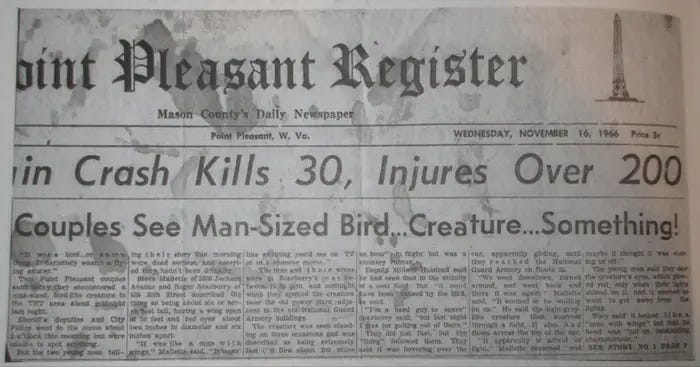
This media coverage created a crucial feedback loop. With the paper validating the initial report, the social barrier for other witnesses to come forward was suddenly lowered. And they did. Almost immediately.
That same night, November 16, a local woman named Marcella Bennett was visiting friends near the TNT Area with her infant daughter. She reported seeing a large, gray figure with glowing red eyes rise slowly from the ground behind her parked car. As they scrambled for the house, Bennett claimed she tripped and fell, and for a terrifying moment, the creature loomed over her before moving onto the porch to peer through a window. The name “Mothman” was coined soon after by a newspaper copy editor, likely inspired by a villain from the popular Batman TV series of the time. The name stuck. The legend was now in flight.
The Long Year
The initial flurry of sightings didn’t just fade away. Instead, they evolved into a sustained, 13-month period of unusual activity that settled over the entire region. The phenomenon also began to expand. It wasn’t just about seeing a creature anymore. The story became a cluster of what investigators called “high strangeness.”
Reports of UFOs and strange lights in the sky became commonplace, with many sightings concentrated over the TNT Area. Then came the visits. Several residents, including journalist Mary Hyre, reported being intimidated by strange men in black suits. These “Men in Black” allegedly asked probing questions about UFOs and the creature sightings. Their behavior was described as bizarre; they spoke in monotones and, in one account from Hyre, one of them never blinked during an entire interview.
A sense of foreboding began to grow in the community. Mary Hyre herself best expressed it. On November 19, 1967, nearly a year into the strange events, she contacted investigator John Keel. She told him about a terrifyingly vivid nightmare she’d had about seeing people drowning in the river amidst Christmas packages floating on the water. She told Keel, “It’s like something awful is going to happen.”
The Prophecy Fulfilled
The “something awful” arrived with shocking finality.
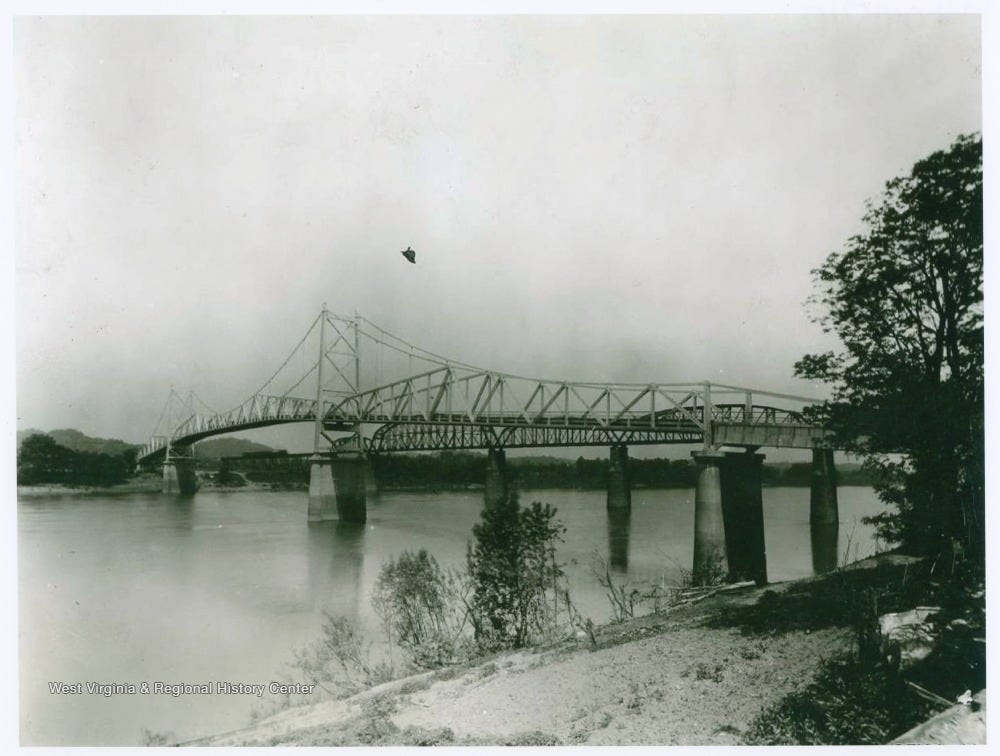
At around 5:00 PM on Friday, December 15, 1967, the Silver Bridge, a 39-year-old suspension bridge connecting Point Pleasant to Ohio, collapsed during heavy rush-hour traffic. The entire structure buckled and fell “like a deck of cards” in less than 20 seconds. Forty-six people lost their lives in the icy water below.
In the immediate aftermath of the tragedy, the Mothman sightings, the UFO reports, and all other strange phenomena that had plagued Point Pleasant for 13 months abruptly ceased. The silence was profound. It created a narrative vacuum that was quickly filled by a powerful and enduring explanation: the Mothman had been an omen. The entire year of terror was retroactively reinterpreted as a series of unheeded warnings leading up to the prophesied disaster.
The Case Against the Mothman
The strange reports from Point Pleasant stopped with the collapse of the Silver Bridge. That’s where the paranormal file seems to end. But it’s the exact moment another file begins - the official one. This is the story told not by terrified eyewitnesses, but by engineers in hard hats, by wildlife biologists with migration charts, and by psychologists who study how fear can take root in a community. Their version of events has no monsters or omens, but it’s a crucial part of the puzzle, and it leads to its own startling conclusions.
Hypothesis #1: An Ornithological Error
Could the Mothman have been just… a bird? It’s the first place any grounded investigation has to look. The idea is that in the darkness and panic, witnesses simply misidentified a large, perhaps unfamiliar, bird. There are two main suspects in this ornithological lineup.
First up: the Sandhill Crane. And it’s a monster of a bird. A Sandhill Crane can stand nearly as tall as a man and boasts a wingspan that can stretch over seven feet. More importantly, it has a patch of bright red, featherless skin right on its forehead. It’s easy to imagine how a car’s headlights hitting that patch could create the illusion of glowing red eyes. But there are problems with this theory. For one, West Virginia isn’t a primary migration route for these cranes. They’re not common in the area. And would every witness really fail to mention the crane’s long, obvious neck?
That brings us to suspect number two: a large owl, maybe a Barred or Great Horned Owl. This theory has a lot going for it. The “glowing red eyes” can be explained by a biological feature called the tapetum lucidum. It’s a reflective layer in the eyes of many nocturnal animals that causes a brilliant, often crimson, eyeshine when hit with a direct light source. An owl’s body shape also fits. With its large head blending right into its body, it could easily be perceived as a “headless” creature in a fleeting glimpse. And, of course, their flight is almost completely silent. The main issue is size. A Barred Owl is big, but it’s not seven feet tall. Skeptics argue that a frightened person in the dark is the world’s worst judge of size and distance. As a final, compelling piece of evidence, an unusually large Snowy Owl was actually shot and killed near Point Pleasant in 1966, proving that big, out-of-place owls were in the area at the time.


Hypothesis #2: The Psychology of a Stressed Community
What if the Mothman wasn’t a bird, but an idea? A shared anxiety that took physical form. The Point Pleasant of the mid-1960s was a community under serious strain. The coal industry was in decline, poverty was widespread, and a general sense of hopelessness pervaded much of Appalachia. On top of that, the entire country was gripped by the paranoia of the Cold War, a constant, low-level fear of hidden enemies and sudden disaster.
This created a perfect storm of social and psychological tension. All it needed was a spark.
That spark was the first newspaper article. A strange yet compelling story, legitimized by the local paper, provides people with a specific framework for their fears. Psychologists call it a collective delusion. A person sees a fleeting shadow in the woods. Normally, they’d dismiss it. But now, with the Mothman story fresh in their minds, their brain interprets that shadow differently. The human mind is built to see patterns - a phenomenon called pareidolia. It’s why we see shapes in the clouds. In an anxious town, people began to see a monster in the shadows. This creates a feedback loop. More sightings get reported, which makes the story seem more credible, which encourages even more people to interpret ambiguous events as a visit from the Mothman. The monster, in effect, becomes real because people start believing it is.
Hypothesis #3: The Forensic Reality of the Silver Bridge
The story of the Mothman is forever tied to the collapse of the Silver Bridge. This is what gives the creature its prophetic, mythic power. But the reason the bridge fell isn’t a mystery.
A multi-year investigation by the National Transportation Safety Board (NTSB) provided a definitive, scientific answer. It all came down to a single piece of steel out of thousands. A part called “eyebar 330.” A tiny stress crack, likely present since the bridge’s construction forty years earlier, had been growing microscopically over the decades. The fatal flaw was located deep inside a joint, completely hidden from view. It was impossible to detect with the technology of the day. On December 15, 1967, weighed down by rush-hour traffic, that tiny crack reached its breaking point. The eyebar failed, and a catastrophic chain reaction brought the entire bridge down in under 20 seconds.
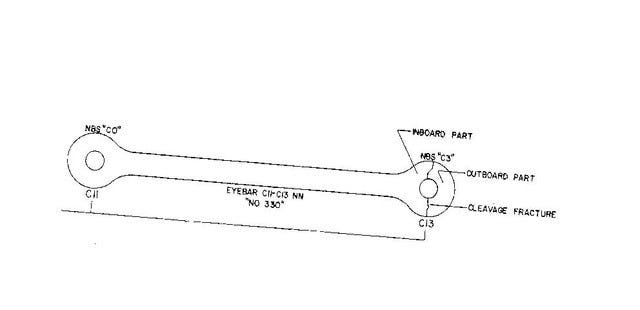
This is the official story - a precise, factual account of metal fatigue, corrosion, and outdated engineering. It explains the how of the tragedy with cold, hard data. And yet, for many, it doesn’t close the case. The forensic report is silent on the thirteen months of terrifying encounters that preceded the collapse. It doesn’t address the strange lights, the unnerving visits, or the impossible creature witnesses swore they saw. The official file explains how the bridge fell, but it leaves the strangeness of that final year an unsettling and unanswered question.
Modern Encounters: A New Chapter
You would think the story ends there, wouldn’t you? The bridge falls, the sightings stop, and the Mothman becomes a sad, strange chapter in a town’s history. While Point Pleasant has certainly memorialized the creature with a museum and an annual festival, the file on the Mothman didn’t close in 1967. The haunting just went quiet for a while.
Case File: Route 2, WV - November 2018
For decades after the collapse, the sightings in the Ohio River Valley became sporadic, little more than whispers in the dark. Then, in November 2018, the creature seemed to come home. A report was filed with the Mutual UFO Network (MUFON) by a witness driving along Route 2, a stretch of road that runs parallel to the Ohio River, just miles from the original TNT Area.
The witness saw a massive, winged humanoid take flight and soar over the road. They took a photograph of the creature, and their description was chillingly familiar: a tall, man-like figure with enormous wings. The report suggested that whatever had terrorized the TNt Area in the 60s was still clinging to the backroads of West Virginia.
The Chicago Flap
Then, something new started happening. It began around 2011 as a trickle of strange reports, but by 2017, it had become a flood. The phenomenon was on the move. It left the quiet, rural darkness of West Virginia and seemed to set up shop in the sprawling urban environment of Chicago. A new “flap” was underway, and investigators at the Singular Fortean Society found themselves trying to make sense of dozens of new reports.
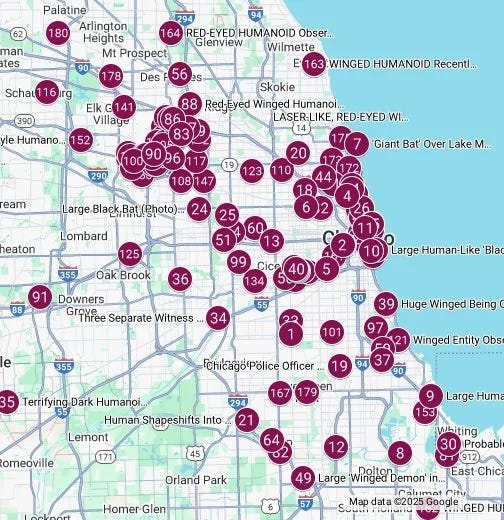
Case File: O’Hare International Airport, IL - August 2017
Some of the most compelling accounts came from one of the busiest places on the planet. It was August 2017. An air traffic controller at O’Hare was on a break outside Terminal 3 with a colleague when he saw a creature standing near a railing. It was seven feet tall. Black, “bat-like,” with glowing red eyes. As they watched, it let out a screech, spread its massive wings, and flew off into the night sky, disappearing over the airport.
Case File: Lincoln Park, IL - April 2017
The sightings weren’t just confined to the airport, either. A few months earlier, multiple witnesses near Chicago’s Lincoln Park saw it. A couple was strolling by the historic Lincoln Park Conservatory on a normal evening. That’s when they noticed something perched on the roof. A huge, pale, winged creature was watching the crowd below. After a moment, it took flight, its ten-foot wingspan casting a shadow as it vanished over the park.
You have dozens of reports, separated by fifty years and hundreds of miles. But the descriptions are all the same. The same size, the same wings, the same glowing red eyes. So you have to ask yourself: did the creature that once stalked Point Pleasant ever truly leave, or has it simply found a new territory?
An American Chimera
In the end, what’s the story of the Mothman?
It’s two stories, existing side-by-side. One is a cold, forensic report about a single, flawed piece of steel. A story of metal fatigue that ends in a tragic, physical failure.
The other is a chaotic collection of witness statements about an impossible creature and thirteen months of high strangeness that came to a dead stop the moment the bridge fell.
The official file explains the how. It has nothing to say about the when. It offers no reason for the chilling alignment of a mundane disaster with a year of terrifying omens. Maybe the truth isn’t in one story or the other. Maybe the real story is the unsettling space between them.
The file is open. The evidence is on the table.
The final verdict is yours.
Case File Attachments
As a thank you for your incredible support, I’ve put together an exclusive piece of bonus material for this investigation.
For this case, I’ve compiled a Timeline of High Strangeness. The thirteen months of the Mothman phenomenon were a chaotic whirlwind of sightings, strange events, and growing fear. This downloadable PDF organizes the entire saga into a detailed, chronological timeline. It follows the story from the first whispers in the fall of 1966, through the media frenzy, the reports of UFOs and Men in Black, all the way to the final, tragic day in December 1967. It’s the ultimate reference guide to the Point Pleasant case.
This is an exclusive document created just for my subscribers, and it’s the perfect companion to the full article. Click the link below to download your copy. Thank you again for being part of the Paranormal Pathways team.

References
American Experience. (n.d.). The Cold War and the paranoid style. PBS. Retrieved September 5, 2025, from https://www.pbs.org/wgbh/americanexperience/features/nash-hysteria/
Appalachian Regional Commission. (2015, March). Appalachia then and now: An analysis of socioeconomic change. ARC.gov. Retrieved September 5, 2025, from https://www.arc.gov/wp-content/uploads/2020/06/AppalachiaThenAndNowCompiledReports.pdf
Baker, R. A. (1992). Hidden memories: Voices and visions from within. Prometheus Books.
Bane, T. (2014). Encyclopedia of beasts and monsters in myth, legend and folklore. McFarland.
Barker, G. (1970). The Silver Bridge. Saucerian Books.
Coleman, L. (2002). Mothman and other curious encounters. Paraview Press.
"Couples See Man-Sized Bird… Creature… Something." (1966, November 16). Point Pleasant Register.
Daly, J. (2023). Mothman, the Silver Bridge collapse, and the folklorization and commemoration of actual events. Journal of Scientific Exploration, 37(1), 80–87. https://doi.org/10.31275/20232599
Elbein, A. (2018, October 26). Is the Mothman of West Virginia an owl? Audubon Magazine. Retrieved September 5, 2025, from https://www.audubon.org/magazine/mothman-west-virginia-owl
French, C. C., & Wilson, K. (2020). Anomalistic psychology. In The SAGE Handbook of Personality and Individual Differences. SAGE Publications.
Gipe, G. A. (1997). The Great Silver Bridge Disaster Revisited. McClain Printing Company.
Godfrey, L. (2020). I know what I saw: Modern-day encounters with monsters of new urban legend and old. Penguin Books.
Hasken, E. A. (2022). The migration of a local legend: The case of Mothman. ProQuest Dissertations & Theses Global.
Hyre, M. (1966, November 17). Winged, red-eyed 'thing' chases Point couples across countryside. The Athens Messenger.
Keel, J. A. (1975). The Mothman prophecies. Saturday Review Press.
LeRose, J.G. (2001). The collapse of the Silver Bridge. West Virginia Historical Society Quarterly, 15(4).
Loftus, E. F. (1996). Eyewitness testimony. Harvard University Press.
"Monster Hunters Crowd TNT Area." (1966, November 21). The Charleston Gazette.
Moseley, J. W. (2002). Shockingly close to the truth!: Confessions of a grave-robbing ufologist. Prometheus Books.
Mutual UFO Network. (2018). File 92117-WV - Winged humanoid photographed over Route 2. MUFON Case Management System.
National Transportation Safety Board. (1970). Highway accident report: Collapse of U.S. 35 highway bridge, Point Pleasant, West Virginia, December 15, 1967 (NTSB-HAR-71-1). U.S. Government Printing Office.
Nickell, J. (2004). The mystery chronicles: More real-life X-files. University Press of Kentucky.
Peebles, C. (1994). Watch the skies! A chronicle of the flying saucer myth. Smithsonian Institution Press.
Persinger, M. A. (1987). Neuropsychological bases of God beliefs. Praeger.
Radford, B. (n.d.). Mothman. Skeptical Inquirer.
Sergent, Jr., D. A. (1995). Weird n' wild West Virginia. Mountain State Press.
Sergent, D., & Wamsley, J. (2002). Mothman: The facts behind the legend. Mothman Press.
Singular Fortean Society. (n.d.). Chicago Mothman investigation. Retrieved September 5, 2025, from
https://www.singularfortean.com/
Small Town Monsters. (2020). The eyes of the Mothman [Documentary].
Sontag, S. (1965). The imagination of disaster. Commentary.
Strickler, L. (2021). Mothman dynasty: Chicago's winged humanoids. Singular Fortean Publishing.
U.S. Army Corps of Engineers. (1941). Construction and operation of the West Virginia Ordnance Works.
Wamsley, J. (2019). Mothman: Behind the red eyes. Mothman Press.
Warren Commission. (1964). The Warren Commission report. U.S. Government Printing Office.
West Virginia Department of Transportation. (n.d.). Silver Bridge. WV.gov. Retrieved September 5, 2025, from https://transportation.wv.gov/highways/bridge_facts/Modern-Bridges/Pages/Silver.aspx